On this page
- Moving from Paper to Steel
- Cutting the Rough Profile
- Refining Your Lines and Grinding
- Ergonomics and the Feel of the Knife
- Marking and Punching Pin Holes
- The Drill Press and Shop Safety
- Cleaning Up Before Heat Treat
- Watch this lesson
Welcome back to Sword Wolf Forge, everybody. This is Lesson 4 in our Bladesmithing 101 series. Today, we are moving on to the next phase. Up until now, there has been a lot more of me talking than actual doing. Well, that changes today. We are going to start getting our hands dirty by cutting out and shaping our blade, getting it fully prepped for the heat treat.
I do want to sincerely apologize for the delay in getting this installment out to you. As many of you know, this shop is not my full-time job. I also work for a city in central Ohio, and part of my job involves snow removal. A few weeks back, we got slammed by a major weather event with over twelve inches of snow. Because I live far from the city, I set up camp in the back of my pickup and stayed there until the snow event was over. It took a couple of days to clear everything, followed by another minor snowstorm, which set my schedule back significantly here at the house. We are finally caught up, so let's pick up right where we left off.
Moving from Paper to Steel
In our previous lesson, we were firmly in the planning phase, and we successfully drew out a knife concept on paper that we liked. Now, we are bringing that concept to life.
I took that design, made a physical template, and traced it out on a piece of 5160 high-carbon steel so I know exactly where to make my cuts. The steel I am using for this project is 3/16 of an inch thick. You can easily make your own template, or you can simply trace your design directly onto the paper, cut it out, place it on your steel, and trace it that way. Both methods work perfectly fine.
I want to reiterate a point from earlier in this series: if you want to heat up the forge and hammer out your blade, by all means, do it. However, this is a beginner class. I am keeping these steps as straightforward as possible so you can get that very first knife under your belt. Starting with stock removal helps you understand why things go a certain way, allows you to build good foundational methods, and gives you the repetition needed to progress.
There is absolutely nothing wrong with stock removal. Even if you hand-forge a blade to shape, you still have to take it to the grinder to clean up the profile and remove material. The only issue I ever have in this industry is when somebody cuts a shape out of flat steel, does full stock removal, and then claims they forged the blade. Honesty is key, but the removal method itself is perfectly valid for knife making.
Cutting the Rough Profile
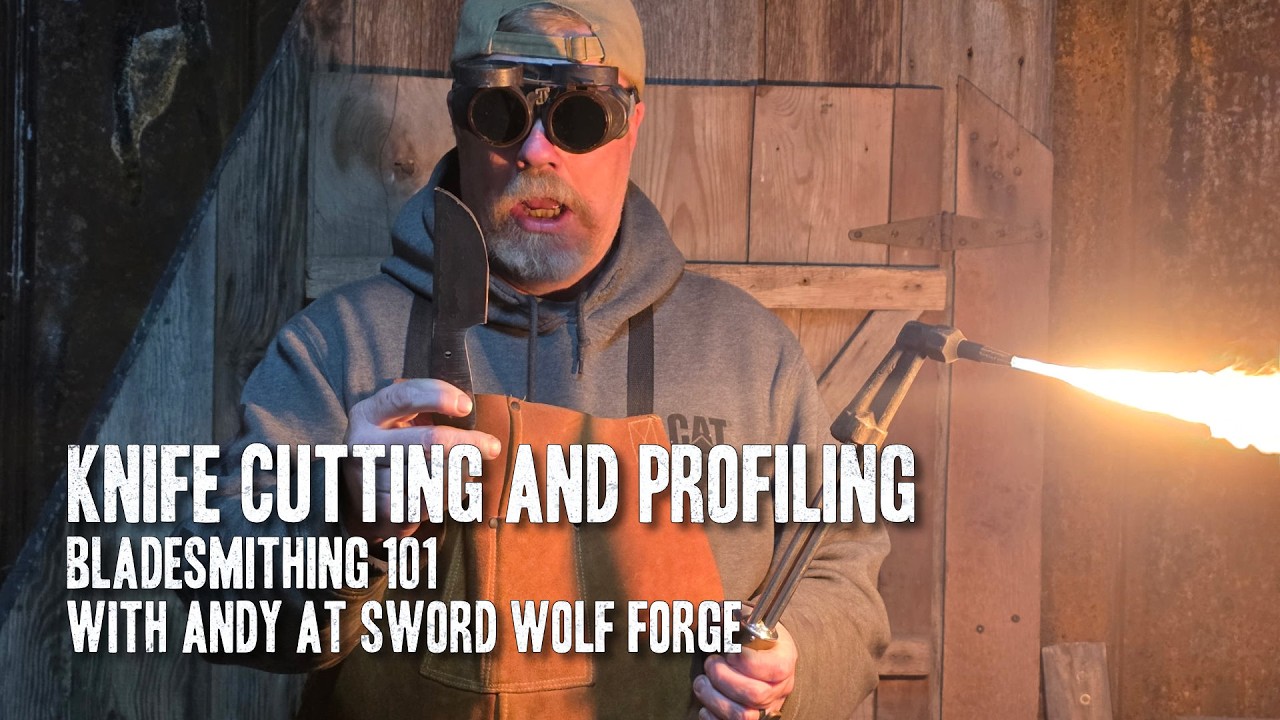
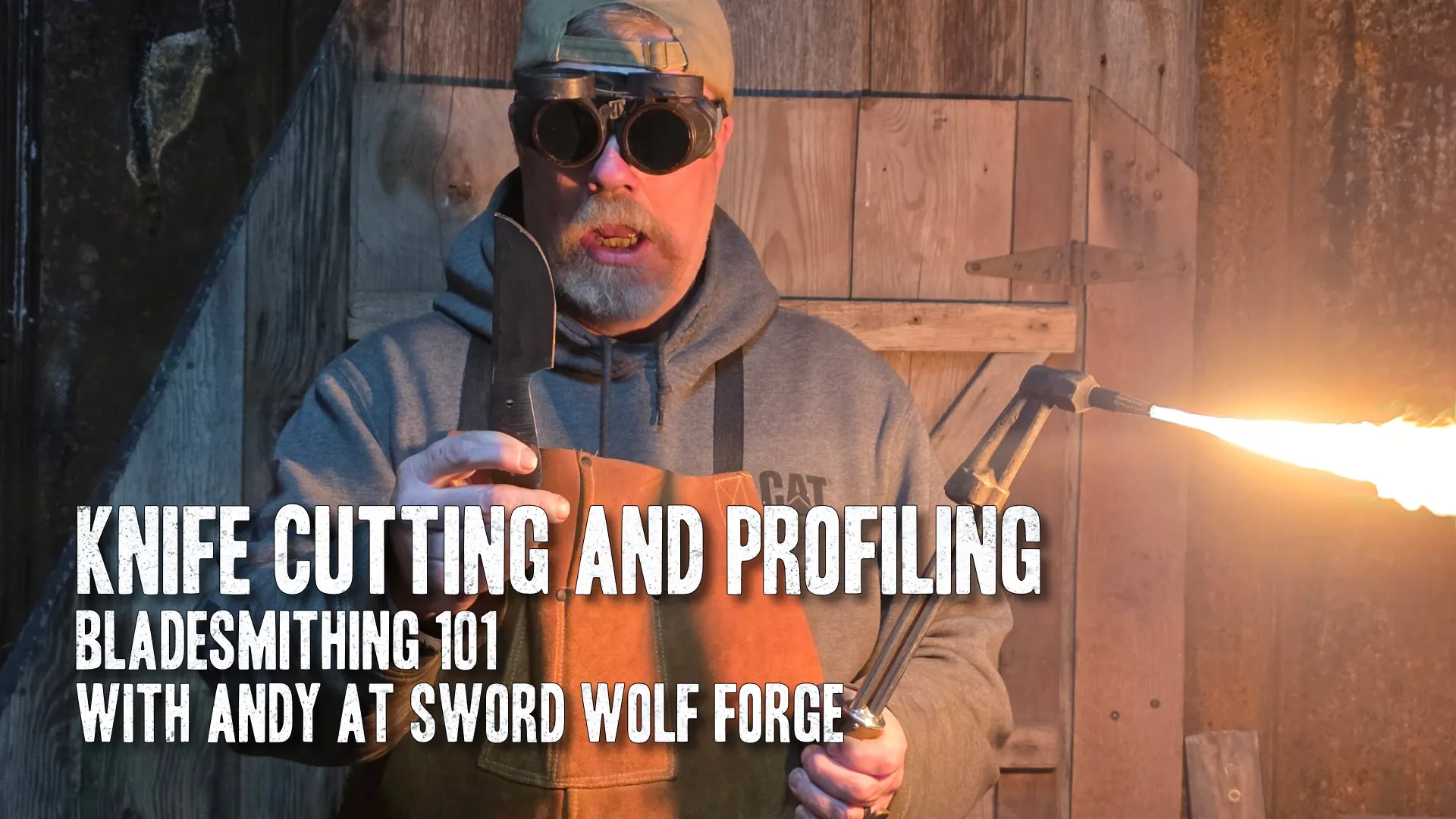
With the design traced onto the steel, it is time to take the 5160 over to the vise. There are several ways you can cut this profile out, and the method you choose largely depends on what tools you have available. If you have a metal-cutting band saw, that is a fantastic option. I am going to use a standard hand grinder with a fresh cutoff wheel.
Before you make a single spark, take a moment to visualize your approach. I like to mentally map out my cuts systematically. I will plan a few diagonal relief cuts to remove the bulk of the material, followed by a straight cut to sever the main waste piece. We do not need to be surgically precise right now because we are going to clean all of those rough edges up on the belt sander later.
Make absolutely sure you are wearing your personal protective equipment. We covered PPE extensively in Lesson 1, and eye protection is mandatory for this step. An angle grinder throws a massive shower of hot sparks, and you need to protect your vision. After making your rough cuts, step back and let the steel cool off for a few minutes, as the friction will make it incredibly hot to the touch.
Refining Your Lines and Grinding
Once you have your rough profile cut out, it is time to take it over to the grinder to clean up the edges and dial in those design lines. If you own a 2x72 belt grinder, it is going to be the fastest and easiest way to tackle this.
If you do not have a 2x72, you still have great options. You can equip your hand grinder with a flap disc to smooth out the steel and remove the heavy material. Another option—though it will take a bit more elbow grease—is to clamp the steel in your vise and use a good set of hand files. Regardless of whether you forged the blade or did stock removal, you are going to spend time refining your profile.
When using a belt grinder, especially if you are new to the machine, safety and technique are critical. The most important rule is to let the belt do the work. Do not push the steel into the belt as hard as you can. Forcing the material is unsafe; if something catches or gives way, your hand is going right into that abrasive belt, and it will hurt you. Use a light, controlled touch, watch your lines, and keep the steel moving.
You also want to keep a bucket of water right next to your grinder. The friction from the belt will heat the steel up extremely fast. Dip the blade into the water frequently to cool things down, which makes it much safer and more comfortable for your bare hands to hold.
Ergonomics and the Feel of the Knife
As you grind the profile, periodically stop and hold the bare steel in your hand. Even though you do not have the wooden handle scales attached yet, you can still get a very good sense of the knife's ergonomics.
While shaping this piece, I noticed a specific area near the grip that did not feel very comfortable in my hand. A good knife design should never hurt the user. Because the 5160 steel is still soft and unhardened, now is the perfect time to make those critical adjustments. I switched over to a small wheel attachment on my grinder to carefully smooth out that harsh curve. If you do not have a small wheel attachment, a half-round hand file works beautifully for this. Taking a few extra minutes to refine the grip will make a massive difference in the final product.
Marking and Punching Pin Holes
The final major step before we can move on to heat treating is drilling the pin holes for our handle scales. I have seen makers use highly complicated methods to measure this out, but on smaller knives, keeping it simple is usually the best approach.
I generally use two pins for a knife of this size. Because there are only two, the exact mathematical spacing between them is not something to stress over. I simply eyeball the center width of the tang. Just keep in mind how far forward you want your handle material to sit; you do not want to drill a hole right on the very edge of where your wood scales will end. Find a nice centered spot near the front, and another well-balanced spot near the back of the tang.
Once you have your spots marked, you need to set them with a center punch. Place your punch directly on the mark and give it a solid hit with your hammer to create a small divot in the steel. This divot acts as a pilot, preventing your drill bit from wandering off across the steel when you apply pressure.
The Drill Press and Shop Safety
With the tang punched, we head over to the drill press. This is a moment where you must be incredibly mindful of shop safety.
A common and highly dangerous hazard when drilling through steel is what many of us call the "propeller of death." As the drill bit pushes through the bottom of the steel, it can abruptly catch the metal. If you are just holding the knife with your hand, the machine will rip it from your grip and start spinning that piece of steel like an airplane propeller at a hundred miles an hour—right where your hands and wrists are.
To prevent this, absolutely always clamp your steel down securely to the drill press table. I often use an additional clamp as a backup stop just in case. If the bit ever does catch, the best thing to do is hit the power switch immediately and back away.
For drilling, I use 3/16 inch jobber bits that I get from Pops Knife Supply. You can buy incredibly expensive solid carbide bits for tough materials, but standard jobber bits work great for unhardened steel. I also highly recommend using a dab of cutting fluid or bit lubricant. It helps the bit cut smoother and significantly lengthens the life of the tool. Apply gentle, steady pressure, lift the bit up occasionally to clear the metal shavings, and let the machine work.
Cleaning Up Before Heat Treat
After you successfully drill your holes, take a close look at the back side of the tang. Pushing a drill bit through steel almost always leaves sharp, jagged metal burrs sticking up around the rim of the hole.
These burrs can easily slice your finger open if you are not paying attention while handling the blade. Do yourself a favor and immediately take the knife over to a wire wheel or lightly tap the holes against your grinder to remove them. It only takes a second, and it will save you a lot of unnecessary pain down the road.
At this point, we have successfully taken a flat piece of steel and turned it into something that really looks like a knife. But it is not a functional knife quite yet. The steel is still soft, and our next critical step is the heat treat.
In our next lesson, we are going to explore exactly what heat treating is, why it is the most important step in bladesmithing, and how it physically changes the structure of the steel. I will break the science down so it is simple and easy to understand.
Thank you all for tuning in again, and let's pray to the snow gods that we are finally done with that white stuff for the year. See you in the next lesson, and stay sharp, everybody.
If you have questions about the tools or techniques used today, reach out through the contact form and I will be happy to help.
To follow along with the full series and see these builds in action, subscribe to our YouTube channel.